31/10/2026
𝗗𝗢𝗝 𝗟𝗲𝗮𝗱𝘀 𝗣𝗵𝗶𝗹𝗶𝗽𝗽𝗶𝗻𝗲 𝗗𝗲𝗹𝗲𝗴𝗮𝘁𝗶𝗼𝗻 𝘁𝗼 𝗜𝗡𝗧𝗘𝗥𝗣𝗢𝗟 𝗔𝘀𝗶𝗮 𝗮𝗻𝗱 𝗦𝗼𝘂𝘁𝗵 𝗣𝗮𝗰𝗶𝗳𝗶𝗰 𝗖𝘆𝗯𝗲𝗿𝗰𝗿𝗶𝗺𝗲 𝗖𝗼𝗻𝗳𝗲𝗿𝗲𝗻𝗰𝗲 𝗮𝗻𝗱 𝗕𝗶𝗹𝗮𝘁𝗲𝗿𝗮𝗹 𝗠𝗲𝗲𝘁𝗶𝗻𝗴𝘀 𝗼𝗻 𝗖𝘆𝗯𝗲𝗿𝗰𝗿𝗶𝗺𝗲
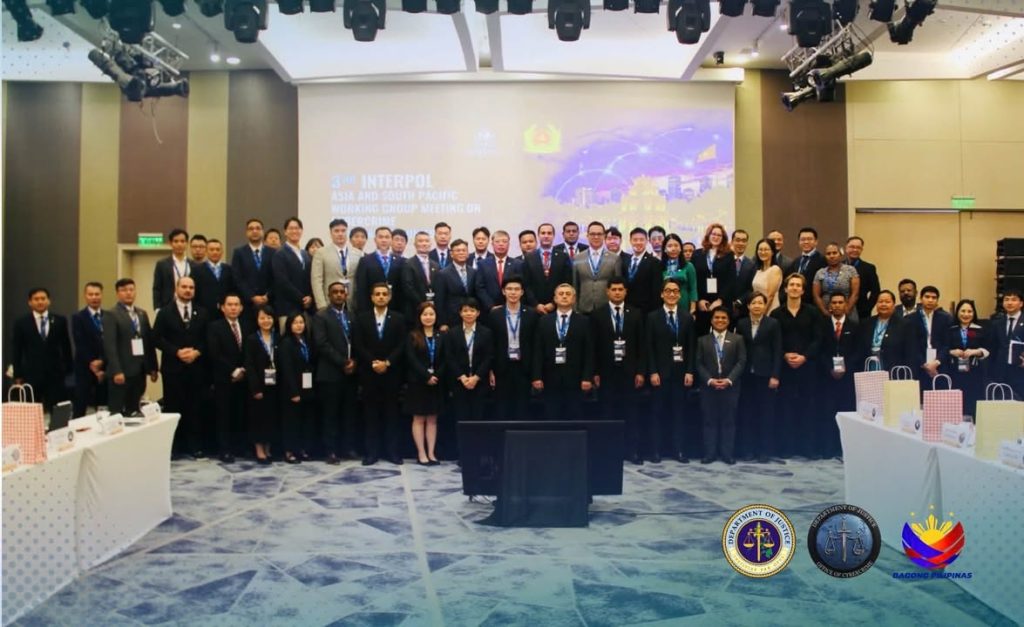
HANOI, VIET NAM — The Department of Justice (DOJ), through its Office of Cybercrime (OOC), led the Philippine delegation to the 3rd INTERPOL Asia and South Pacific Working Group Meeting on Cybercrime for Heads of Units, held on 27–30 October 2026 in Hanoi, Viet Nam, strengthening the country’s engagement in regional efforts against transnational cybercrime.
The Philippine delegation was headed by DOJ–OOC Director Dr. Aris S. Manguera. The meeting brought together 70 participants from 22 countries, representing law enforcement agencies, research institutions, private-sector organizations, and regional and international bodies, to advance cooperation in preventing, detecting, investigating, and disrupting cybercrime.
During the event, Dr. Manguera emphasized the need for a legal and procedural framework governing the admissibility of AI-generated and AI-assisted evidence, particularly concerning authenticity, reliability, transparency, and evidentiary value. Dr. Manguera further stressed the significance of collaboration among law enforcement agencies, prosecutors, and private-sector entities in ensuring that cybercrime intelligence and investigative findings are translated into legally admissible evidence and effective prosecutions. Dr. Manguera’s intervention underscored the importance of aligning emerging investigative technologies with established evidentiary standards and prosecutorial requirements.
Discussions focused on three strategic pillars: enhancing cybercrime intelligence, strengthening joint operations and cooperation, and developing regional capacity and capabilities. INTERPOL emphasized the importance of timely intelligence sharing, coordinated cross-border investigations, and stronger public-private partnerships to address ransomware, phishing, data breaches, cryptocurrency-related offenses, and other emerging cybercrime threats.
Participants explored strengthening regional operational subgroups, improving intelligence exchange, and coordinating action against criminal networks and shared cybercriminal infrastructure. The meeting also highlighted the importance of capacity-building through specialized training, practical exercises, digital forensic capabilities, and the responsible use of AI-enabled investigative tools.
The meeting also addressed cryptocurrency investigations, blockchain analytics, digital asset tracing, and the freezing and recovery of criminal proceeds. Participants emphasized the principle of prioritizing the preservation of electronic evidence and freezing of suspected illicit assets, while pursuing appropriate legal processes for their subsequent acquisition or seizure.
Discussions highlighted the complementary use of corporate law enforcement portals, INTERPOL channels, the Budapest Convention’s 24/7 Network, and law enforcement attachés for urgent international coordination, alongside formal mutual legal assistance mechanisms. The meeting likewise reinforced the importance of converting operational intelligence into independently obtained, legally supportable evidence, while protecting investigative sources and ensuring compliance with applicable laws.
The meeting concluded with an emphasis on translating regional cooperation into measurable investigative, disruption, and prevention outcomes, supported by stronger intelligence sharing, coordinated operations, and sustained capacity development.
The Philippine delegation’s participation reaffirmed the DOJ–Office of Cybercrime’s commitment to strengthening international partnerships, enhancing investigative and prosecutorial capabilities, and promoting coordinated action against transnational cybercrime.
Through continued engagement with INTERPOL and international law enforcement partners, the DOJ–OOC seeks to advance a more effective, intelligence-driven, and prosecution-oriented response to cybercrime, contributing to a safer and more secure digital environment in the Philippines and across the region.