11/12/2026
What are the expected impacts to the Town’s surrounding infrastructure from the Industrial School Redevelopment?
A project the size of either option available to the Town will certainly have impacts to the Town’s existing infrastructure. What could those impacts be, and what has been studied about those impacts?
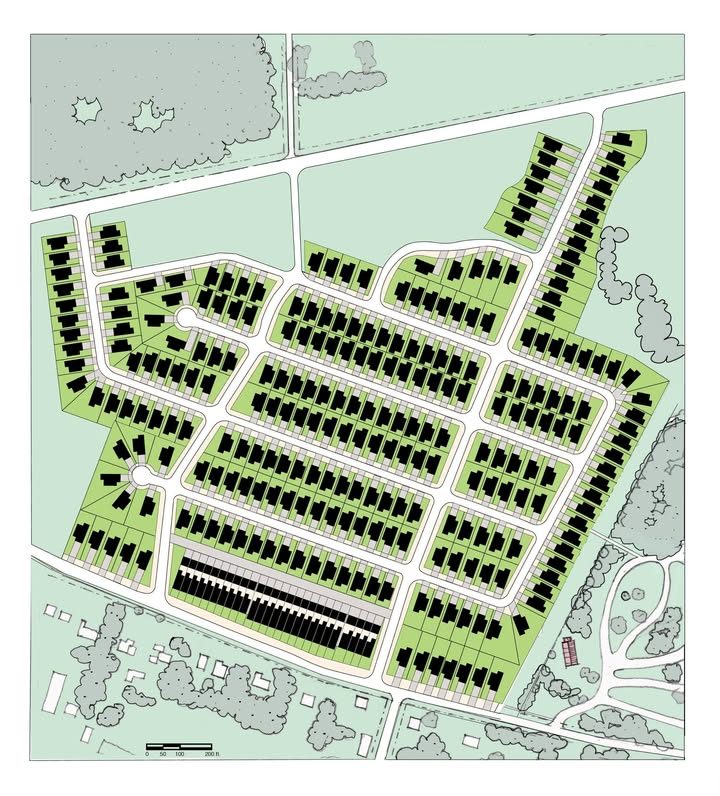
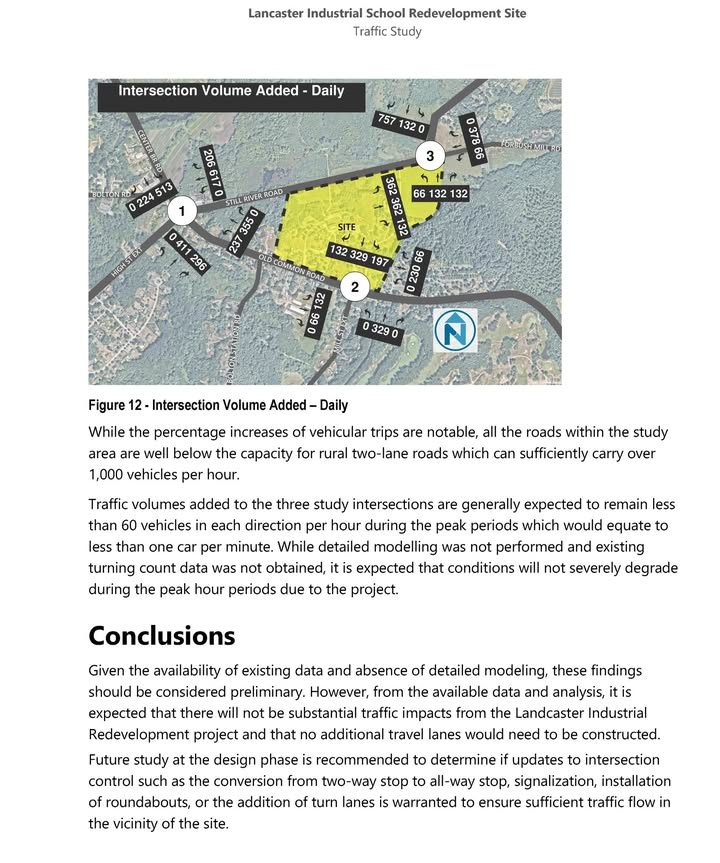
The State hired a consultant to perform a high-level analysis of the water, sewerage, and traffic impacts that could be caused by the 386 unit development. In regard to traffic, while additional trips will be generated from the development, because the development creates two new north-south pathways across the property, this will help to direct traffic away from the “Five-Corners” intersection located to the west of the project. The additional traffic would not be expected to negatively impact the operations of adjacent intersections. As specific development plans are created, the developer will be required to study further the traffic network, and determine what, if any, improvements may be needed to mitigate any potential traffic impacts from the development.
Either development scenario will have a private wastewater network constructed, with an onsite groundwater discharge treatment plant. Until future changes are made to the MWRA Clinton Wastewater Treatment Plant, it would not appear that capacity exists at the plant to accept additional flows. As such, all waste water will be handled on site, and the cost to operate and maintain the wastewater will be handled entirely by a private homeowners association. There will be no impact to the operations of the Lancaster Sewer District.
There are two options available to a developer in regard to drinking water. Under the Town’s existing well capacity, the Town’s water system will not be able to provide domestic and fire protection water to the site. A new well will be necessary to support either development type. A well just for the development will need to produce 100,000 gallons per day. A well for the Town and the development will need to produce about 1 million gallons per day, a tenfold difference in flows.
The Town’s Department of Public Works has been studying and working to secure a municipal water source on the DCAMM property for over 15 years, and has invested significant monies to date to perform well exploration and preliminary permitting. Looking throughout the Town for a new well source, this location on the DCAMM property is the only identified, viable source of drinking water available to the Town. A new municipal well is needed to provide redundancy to the existing system, as well as to provide capacity for future Town growth, regardless of whether the DCAMM property is redeveloped. The total cost of a new drinking water well is expected to range between $5.5 and $6.5 million. By contrast, to design and construct a private, 100,000 gallon per day would cost approximately $900,000 for a developer.
If the zoning change is approved, per the Memorandum of Agreement between the Town and State, in order to provide water for the Town’s existing needs and the addition of the new development, the State will provide the Town with the land necessary for the wellhead and its associated protection zone. The State will also require the Developer to contribute $3,000 per unit, or up to $1,158,000, towards the construction of a new municipal drinking water well.
If the zoning amendment is passed, the Town secures a well site that will provide the drinking water for the Town for decades, and receives money equivalent to approximately 20% of the cost of the well construction. If the zoning amendment fails, a developer may choose to simply construct the $900,000, 100,000 gpd well. In that scenario, the Town loses a second, redundant well, and the ability to expand its water supply to meet current and future demands.
To summarize, the project is not expected to result in significant impacts to current traffic volumes at existing intersections. The Sewer District’s wastewater infrastructure will not be used at all. If the zoning amendment is approved, the water system will receive land and money for the construction of a new well that will increase the resiliency of the existing drinking water system and allow it to meet future demands. Without the zoning being approved, there will be no direct impacts to the Town’s water system, but the system will remain unable to provide for growth, and continue to remain reliant on only one water source.
The preliminary traffic report can be found here: https://www.ci.lancaster.ma.us/DocumentCenter/View/4692/Lancaster-Redevelopment-Project_Traffic-Study-9-30-25
To see the discussion by Rick Krafve, Chair of the Public Works Board, about the impacts to the water system, follow this link: https://youtu.be/3-OBaEvBsH0